Search
On FM Scout you can chat about Football Manager in real time since 2011. Here are 10 reasons to join!

SÃO PAULO FC – REBUILDING AN IDENTITY: THE TELÊ SANTANA PHILOSOPHY

A long term save focused on restoring São Paulo FC’s identity through positional play, collective pressing and youth development, inspired by Telê Santana. Process over shortcuts, structure over chaos, and a footballing philosophy guiding every decision.
Started on 16 January 2026 by LSLeite
Latest Reply on 29 January 2026 by LSLeite
  • POSTS5
  • VIEWS2210
 
LSLeite's avatar Group LSLeite
1 monthEdited
SÃO PAULO FC – REBUILDING AN IDENTITY
THE TELÊ SANTANA PHILOSOPHY


There are many ways to win in Football Manager.

This save is not about finding the most efficient tactic, exploiting the match engine, or chasing short-term success.
It is about something harder to build — identity.

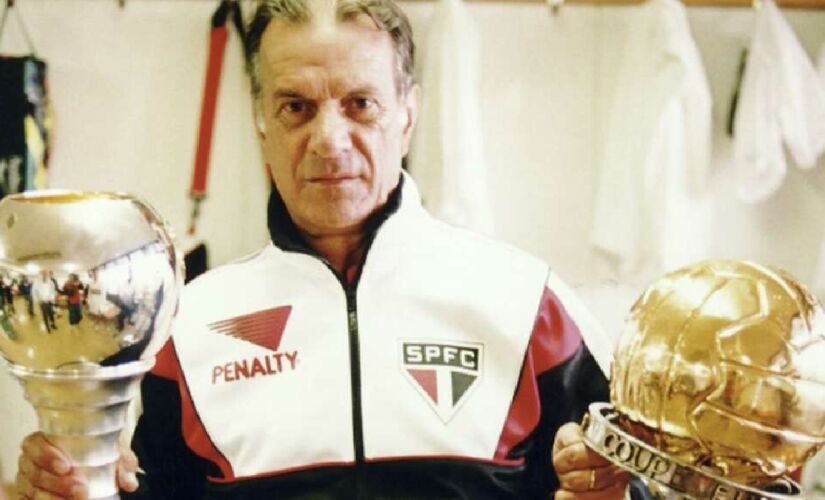
São Paulo FC is one of the most successful clubs in South American history, but for many supporters, its greatest legacy is not a specific title, but a way of playing football.
That legacy reached its highest point under Telê Santana, particularly during the early 1990s.

Over time, that identity faded.

Different coaches, different ideas, constant tactical resets — and a club that slowly stopped recognizing itself on the pitch.

    Why should Telê Santana be remembered as an era, and not treated as a permanent philosophy?

Project Vision

The objective of this save is to rebuild São Paulo FC around a clear, coherent footballing philosophy, inspired by Telê Santana and adapted to Football Manager 2024.
  • Possession as a tool, not an obsession
  • Structured build-up, not sterile circulation
  • Tactical intelligence over physical chaos
  • Collective superiority over individual improvisation
  • Youth development aligned with the first team’s model
Winning matters — but how we win matters more.

Tactical Foundations

The base system is a 4-2-3-1 asymmetric shape, which in possession often resembles a 3-2-4-1.
  • A strong right side, driven by an attacking wing-back (Cafu)
  • A more conservative left side, focused on balance and structure
  • A central attacking midfielder as the main decision-maker (Raí)
  • A mobile striker who connects play rather than acting as a static target (Müller)
  • High positional discipline combined with controlled creative freedom
This is not gegenpress, route one football, or chaos-based intensity.
It is control through structure.

Beyond the First Team

This project does not stop at tactics.

  • Staff recruitment aligned with the club’s philosophy
  • A restructured youth pathway
  • A functional U23 team to reduce unnecessary loans
  • South American scouting as a strategic priority
  • Long-term squad planning over short-term fixes
The goal is to make every level of the club speak the same footballing language.

What to Expect in This Thread
  • Tactical diagrams and explanations
  • Fictional press releases and newspaper-style updates
  • Squad and staff decisions explained through philosophy, not meta
  • Youth development stories
  • Failures, adjustments, and lessons learned
This is a slow-burn save, focused on immersion and coherence.

If you’re looking for instant trophies, this may not be for you.
If you’re interested in football identity, structure, and long-term thinking — welcome.


https://sortitoutsi.net/content/76078/sao-paulo-fc-rebuilding-an-identity-the-tele-santana-philosophy
LSLeite's avatar Group LSLeite
1 monthEdited


LUCIANO SILVÉRIO TAKES CHARGE AT SÃO PAULO IN UNPRECEDENTED CLUB GAMBLE

Tricolor surprise by appointing an academic with no professional coaching experience. Muricy Ramalho backs the move and promises a return to the club’s historic identity.

Muricy Ramalho supported the bet on Silverio.

01/01/2024
A surprising decision has shaken Brazilian football this week.

São Paulo Futebol Clube have announced Luciano Silvério as their new manager, replacing Luis Zubeldía at the helm of the first team. With no previous experience managing professional sides, Silvério arrives at Morumbi from an academic background, in what the club openly describes as a bold and long-term project.

The appointment was made following a direct recommendation from Muricy Ramalho, São Paulo’s technical coordinator, who defended the decision as part of a broader effort to rebuild the club’s footballing identity.
“I was monitoring possible changes. We need new ideas. Trying the same thing and expecting a different result is the definition of insanity,” Muricy said.

“Silvério has excellent ideas. I met him during coaching courses in Europe and we decided to take a chance on something new. He has our full support.”
Silvério has built his career outside the traditional professional club environment. Known for his tactical research and analytical approach to the game, the new coach arrives surrounded by both curiosity and skepticism, but with strong backing from the club’s leadership.

In his first official remarks, Silvério emphasized continuity rather than rupture.
“Although I bring new ideas, my proposal is not to break with São Paulo’s history.
On the contrary. It is about restoring the club’s identity — the style of play that has always defined us.”
The new manager also referenced the legacy of Telê Santana, the iconic figure behind São Paulo’s golden era in the early 1990s.
“Supporters often speak nostalgically about the so-called ‘Telê Era’. But who said this has to remain just an era?

This can — and should — be a philosophy. That will be the foundation of our work.”
Muricy Ramalho stressed that the appointment should not be judged solely on short-term results.
“This is part of a major, long-term project.We want to build — or rebuild — São Paulo’s footballing identity. And that starts at the academy.”
According to the club, the objective is to align principles, playing style and development pathways across all age groups, creating a unified identity that extends beyond individual managers or generations.

São Paulo’s decision represents a rare departure from conventional hiring logic in Brazilian football — a calculated gamble on ideas, structure and long-term identity rather than immediate results.
LSLeite's avatar Group LSLeite
1 monthEdited


São Paulo launch deep rebuild and embrace international project led by Silvério


Leonardo appointment as Director of Football.

04/01/24
Just weeks after taking charge at São Paulo Futebol Clube, Manager Luciano Silvério has already made it clear that his tenure at the Morumbi will not be defined by short-term fixes. Inside the Barra Funda training center, the club is undergoing sweeping structural changes — signaling a rebuild rooted in identity, methodology, and long-term vision.

The first symbolic move of the new cycle was the appointment of Leonardo Nascimento de Araújo as Director of Football. A club icon and FIFA Club World Cup winner with São Paulo, Leonardo returns after a long international career to play a central role in reshaping the football department.

This is a long-term project,” Leonardo told ESPN. “We need to restore a clear playing model and a consistent development pathway.”

An international backroom staff and a shift in culture

The overhaul quickly extended to the coaching staff, now marked by a strong international profile. Silvério leaned on relationships built through European courses and experiences to assemble a staff with diverse backgrounds and shared methodology.

The club brought in Turkish coach Özhan Pulat as Assistant Manager; Argentine Fernando Cinto to oversee Youth Development; and English analyst Harrison Kingston, who has previously worked with Tottenham Hotspur and Liverpool FC.

Physical preparation was also reinforced with English coach Teddy Sheringham and Portuguese specialist Geraldo Alves Regufe Washington.

Among Brazilian staff, the return of veteran Physio Carlinhos Neves stands out.
We’ve struggled with injuries in recent seasons,” Leonardo explained. “Bringing Carlinhos back is a key step in addressing that.

Behind the scenes: method over improvisation

According to ESPN sources close to São Paulo’s football operations, the changes go well beyond the names officially announced. The new structure is designed to alter daily routines, decision-making criteria, and performance evaluation across both the senior squad and the academy.

Club insiders describe a clear push for methodological consistency, stronger integration between youth levels and the first team, and greater reliance on data and process-based analysis.

This isn’t about copying a European model,” one source told ESPN on condition of anonymity. “It’s about building São Paulo’s own identity, using international references.

Internally, there is acknowledgment that the club lost its footballing identity in recent years, frequently shifting styles and short-term plans. The current leadership sees this project as a chance to finally break that cycle — even if it requires patience.

South American scouting and a renewed focus on youth

Scouting is another pillar of the rebuild. São Paulo has expanded its network with a particular focus on South America, targeting markets such as Argentina, Chile, Peru, and Uruguay.

That market will be a priority — both for signings and for identifying young talent,” Silvério said.

At academy level, a symbolic move saw former goalkeeper Zetti promoted to Manager Under-20s. Leonardo emphasized the historical weight of the decision.

We played together, we’re friends,” he said. “Zetti represents the bridge between São Paulo’s winning past and the future we want to build.

Under-23s as a strategic link

Not every decision came without friction. Technical Director Muricy Ramalho confirmed the departure of long-time assistant Milton Cruz after talks broke down over a potential role with the Manager Under-23s. The position was instead filled by Argentine coach Andrés Lillini.

Within the new structure, the Under-23 squad is viewed as a key transitional step. The goal is to reduce loan spells, maintain closer control over player development, and create a clearer pathway to the first team.

Few clubs have the infrastructure São Paulo offers,” Silvério said. “We want these players developing here.

Analysis: time, pressure, and the real test ahead

São Paulo’s rebuild is ambitious — and deliberately at odds with the short-term mindset that dominates Brazilian football. International staff, a process-driven approach, and renewed investment in youth all point to a club betting on structure over immediacy.

The inevitable question remains: will the football environment allow this project the time it needs?

São Paulo has made its choice. The biggest challenge now lies off the pitch — resisting impatience, surviving early turbulence, and proving that identity and method can still win in a results-driven game.

São Paulo Begin Season with Intense, Well-Defined Identity at Barra Funda Training Centre


10/01/24

São Paulo Futebol Clube continue to make important progress in building their identity for the season. During pre-season training at the Barra Funda Training Centre, the coaching staff led by Luciano Silvério have focused on collective organisation, intensity and spatial control, laying clear foundations for the upcoming competitions.

The team’s structure is built around a 4-2-3-1, used not merely as a formation, but as a behavioural reference across all phases of play. The side have shown a strong balance between aggression without the ball and control in possession, prioritising compactness, intelligent occupation of space and collective decision-making.

In midfield, the system is supported by two holding players with complementary roles: one more positional, responsible for defensive balance, and another with greater freedom to support the build-up and circulation in advanced areas. Ahead of them, the attacking midfield trio operate with constant mobility, seeking spaces between the lines and supporting the striker to accelerate play in the final third.

The full-backs operate asymmetrically depending on the game phase. While one provides width and depth down the flank, the other remains more conservative, forming a back three during the build-up. The wide attackers alternate between outside and inside movements, opening passing lanes and creating uncertainty for opposing defences.

Out of possession, São Paulo have stood out for their coordinated pressing and immediate counter-pressing after losing the ball. When recovery is not achieved within the first seconds, the team quickly reorganises into a compact mid-block, keeping short distances between lines and maintaining zonal references.

A Core Line-up Takes Shape

As pre-season progresses, a clear core structure has begun to emerge. The team have worked with Rafael in goal, supported by Rafinha, Arboleda, Alan Franco and Jamal Lewis across the defensive line.

In midfield, Marcos Antônio and Santiago Longo form the base of the system, providing balance, ball circulation and support to the press.

Further forward, Luciano has been deployed as the central attacking midfielder, operating between the lines and acting as the team’s creative link, with freedom to arrive in the box and finish moves.

On the flanks, Lucas Moura features on the right and Michel Araújo on the left, alternating between width and inside runs.

Leading the attack, Jonathan Calleri remains the main reference point. During training sessions, the striker has been encouraged to play a more associative role outside the penalty area, creating space for midfield runners and reinforcing the collective attacking dynamics.

The work being developed at Barra Funda points to a São Paulo side with clear ideas, a well-trained model and a solid foundation taking shape. Pre-season remains a key stage in consolidating these principles and preparing the squad for the demands of the competitive calendar ahead.


São Paulo FC Begin the 2024 Season Focused on Competitiveness and Identity


29/01/24

São Paulo Futebol Clube begin the 2024 season committed to competing at the highest level across all competitions while strengthening a solid, modern footballing identity aligned with the club’s history. After an intense preparation period at the Barra Funda Training Centre, the Tricolor enter the year with clear objectives and a well-defined plan.

In 2024, São Paulo will compete in four major tournaments: the Brazilian São Paulo State Championshi , the CONMEBOL Libertadores, the Brazilian Championship and the Brazil Cup.

The Brazilian São Paulo State Championship opens the calendar and will play a key role in consolidating the team’s playing model, building competitive rhythm and strengthening the connection with supporters. In the Libertadores — a competition deeply tied to the club’s identity — São Paulo will seek international prominence while respecting the tradition of the shirt and the demands of continental football.

In the Brazilian Championship, the focus will be consistency match by match, building a competitive and intense team capable of sustaining performance throughout a demanding schedule. In the Brazil Cup, a tournament defined by decisive knockout ties, the objective will be to progress with solidity and a winning mentality.


São Paulo FC close out the first month of the season with a clear identity and signs of progress
29/01/24

São Paulo Futebol Clube have completed the first four matches of the season reaffirming their commitment to a clearly defined playing model, built on controlled possession, intelligent occupation of space and attacking protagonism — core principles of the project. Across the opening fixtures, the team showed collective growth, sustained attacking volume and an increasing ability to turn territorial dominance into real scoring opportunities, even as some areas still demand refinement.

Match 1 — Opening performance marked by structure and territorial control
In their season debut, São Paulo displayed a well-organised side from the opening minutes. The team dictated the tempo, circulated the ball with purpose and consistently operated in the opposition’s half. Despite being an opening match, still in an adjustment phase, the identity was already clear: clean build-up, mobile midfielders and active full-backs. Greater sharpness in the final third was needed, but the collective foundations were firmly in place.

Match 2 — Increased attacking volume and improved chance creation
The second fixture represented a clear step forward in creativity. São Paulo significantly increased their number of shots and began to find better attacking angles, particularly through the half-spaces. The side looked more comfortable in possession, pressed higher up the pitch and recovered the ball quickly after losing it. Efficiency in front of goal, however, still lagged behind the volume of chances created.

Match 3 — Control consolidated with added attacking aggression
For the third match, São Paulo entered the pitch with two enforced changes to the starting XI. With Jamal Lewis suspended after his red card against Inter de Limeira, young Moreira was given the opportunity at left-back, while Wellington Rato started the match in place of Michel Araújo, sidelined with injury for an estimated two weeks. Despite the adjustments, São Paulo showed a side more aggressive without the ball and more vertical when required. The team accelerated circulation at key moments, combining long spells of possession with sharper, more direct attacks. Offensive action maps highlighted constant presence in the final third, with midfielders and forwards attacking the box effectively. Once again, converting territorial superiority into goals remained the main challenge.

Match 4 — A derby decided by attacking protagonism
In the first derby of the season, against Santos, São Paulo confirmed their collective superiority. The team counted on the return of Jamal Lewis to the starting XI. São Paulo controlled the match from start to finish, registered more shots, produced a significantly higher xG and kept the opposition away from their goal for long stretches. The 2–1 victory accurately reflected São Paulo’s dominance, with Wellington Rato delivering a decisive performance by scoring twice, sealing a match in which the attacking system functioned with fluidity and sustained pressure.


Monthly analysis
After four matches, the overall assessment is positive and fully aligned with the project’s principles. São Paulo control games, impose tempo, occupy attacking zones efficiently and generate consistent attacking volume. This is not sterile possession: it leads to shots, prolonged pressure and opponent fatigue. Central circulation combined with functional width has clearly emerged as a major strength.

The main area for improvement lies in attacking efficiency. In several matches, a high number of chances did not translate proportionally into goals, calling for better decision-making and timing inside the box. Defensively, the team remain well organised, but must further limit the few chances conceded, particularly during opposition transitions.

Overall, São Paulo conclude the first month with identity, visible evolution and solid foundations. The path is clear: maintain control, refine execution in the final third and continue consolidating a style of play that honours the club’s history — competitive, intelligent and proactive, in the true spirit of Telê Santana.

February Review

25/02/24
February marked a decisive step in São Paulo’s rebuilding process. With the foundations laid in January, the team began to show greater tactical clarity, improved collective behavior, and a growing understanding of the positional principles inspired by Telê Santana’s football. The results came with different faces — dominance, resilience, patience — but always with a clear idea guiding the performances.

Match 5: São Paulo dominated large portions of the match, controlled territory, and spent significant time in the opponent’s half. The team circulated the ball well and maintained structural balance, but the attacking phase exposed a recurring problem.
Despite sustained pressure, São Paulo struggled to accelerate play inside the final third. Ball circulation often remained lateral, allowing Bragantino to reorganize defensively. Crosses arrived without coordinated box occupation, and attacking movements lacked synchronicity between the first and second attackers.
Defensively, the team was mostly stable, but the decisive moment highlighted a critical flaw: rest defense without immediate pressure. When possession was lost, the reaction was delayed, giving the opponent space to finish efficiently.

Match 6: Against São Bernardo, São Paulo once again controlled possession and dictated tempo, but the match demanded a level of patience and clarity that the team has not yet fully mastered.
The opponent defended deep and compact, and São Paulo failed to consistently manipulate defensive lines through quick combinations or third-man runs. Too many attacks ended with low-impact actions around the box, and the lack of vertical runs reduced the effectiveness of central possession.
While the defensive performance remained disciplined, the offensive phase lacked urgency at key moments, turning dominance into slow, controllable pressure for the opponent.

Match 7: This match exposed a different and more concerning problem: game management.
São Paulo controlled the central areas and recovered possession efficiently, but the defensive line pushed high without coordinated pressure ahead of the ball. This created exploitable spaces between the full-back and centre-back, which Novorizontino used intelligently.
After conceding the equaliser, São Paulo showed signs of emotional instability. The team rushed decisions, abandoned positional discipline, and lost compactness late in the match — precisely when control should have been reinforced.

Match 8: São Paulo were clearly superior, controlled territory, and restricted Mirassol to very few meaningful attacking situations. However, the match once again highlighted the team’s lack of ruthlessness.
Attacks repeatedly developed through the same corridors, making defensive reads easier for the opponent. There was limited variation in finishing zones, and rebounds or second balls were rarely attacked with conviction.
Although the defensive structure remained solid, the offensive phase lacked the aggression required to close the game early, keeping the match unnecessarily open.

Match 9: The derby represented São Paulo’s most mature performance of the month, but even here, imperfections were evident.
Defensively, São Paulo were compact and disciplined, denying Corinthians central progression and forcing low-quality chances. However, in possession, the team still showed moments of hesitation in accelerating attacks, choosing safety over penetration.
The decisive goal came from sustained pressure and correct positioning, but the inability to convert earlier opportunities meant the match remained tense longer than necessary.

February also marks the presentation of new signings at São Paulo
The month of February was marked not only by the team’s on-field commitments, but also by the arrival of new additions to the squad.

São Paulo officially presented Weverson, signed on loan from Arouca, and Brenner, who returns to the club after a spell with Udinese. Both players join on loan deals running until the end of the season.

Developed through the Cotia academy, the two players return with the aim of strengthening the squad and providing greater depth throughout a demanding calendar. Weverson arrives as a versatile option, capable of playing both as a left-back and in a more advanced role on the left flank, offering tactical flexibility to the coaching staff.

Brenner, meanwhile, reinforces the attacking line and returns to compete for a place up front. The striker will challenge Calleri for the centre-forward role, increasing internal competition and expanding the team’s attacking options.
With these additions, São Paulo continues its work to strengthen the squad, balancing youth, versatility and depth as the club prepares for the challenges of the season ahead.


São Paulo Crowned Copinha 2024 Champions with Victory over Chapecoense

São Paulo Futebol Clube have been crowned champions of the 2024 Copa São Paulo de Futebol Júnior. On the night of February 5th, at the Pacaembu Stadium, Tricolor defeated Chapecoense 4–1 in the final to lift another trophy in Brazil’s most prestigious youth competition.

With a composed and dominant performance, the Under-20 side imposed its rhythm from the opening minutes and built the scoreline in the first half, confirming its superiority throughout the match and sealing a consistent campaign across the tournament.

The title also marks Zetti’s first trophy as manager of the Under-20 team. A legendary figure in the club’s history, the former goalkeeper took charge of the category this season and led the squad with organisation, intensity and a clear collective identity, reflecting the work developed during the preparation period.

Beyond the collective achievement, individual performances were also recognised. Moreira was voted Player of the Tournament, underlining his consistency and impact throughout the Copinha. In addition to him, left-back Luiz Felipe, left midfielder Caio and striker Ryan Francisco were all named to the Team of the Tournament, reinforcing São Paulo’s dominance in the competition.

Moreira’s performances have already earned him opportunities at a higher level, with the full-back featuring in training sessions alongside the first team on several occasions and being selected for matches in the Paulista Championship, highlighting his rapid progression and the club’s confidence in his development.

Present at the Pacaembu to watch the final, first-team head coach Luciano Silvério highlighted the importance of the work carried out at academy level after the match.

“The title is important, of course, but what mattered most was seeing Zetti trying to implement our playing philosophy with the youngsters. More than winning, what we saw today was an organised, competitive team aligned with what we believe in for the club as a whole,” said Silvério.

São Paulo’s Copinha 2024 campaign was defined by steady progression round by round, defensive solidity, intensity in pressing without the ball and decisiveness in key moments of the competition, culminating in a confident performance in the final against Chapecoense.

With another trophy added to the cabinet, Tricolor reaffirm the strength of Cotia as a strategic pillar of the club and reinforce their commitment to developing players who are technically, tactically and mentally prepared for the challenges of professional football.

You are reading "SÃO PAULO FC – REBUILDING AN IDENTITY: THE TELÊ SANTANA PHILOSOPHY".

FMS Chat

Stam
hey, just wanted to let you know that we have a fb style chat for our members. login or sign up to start chatting.